

Distributed Antenna Systems (DAS)
Enterprise Systems deploys Distributed Antenna Systems to ensure you meet regulations and requirements for first responder and cell signal within your buildings. Enterprise Systems is an authorized and certified Wilson Electronics Partner. Wilson is the industry leader with 52-year RF product history with over 80 patents. All Wilson products are designed, engineered and produced in the United States of America.
We can cost effectively expand wireless network coverage to everyone, everywhere utilizing WilsonPro technologies.
What Materials Block Cellular Signal?
If your business is dealing with bad cell reception, chances are…it’s not your carrier. More than likely, it’s your building.
Building Scenario 1
Signal Amount Blocked
Building Scenario 1
Signal Amount Blocked
Signal Key
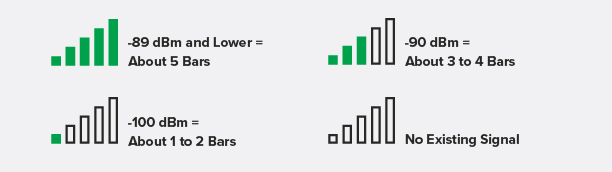
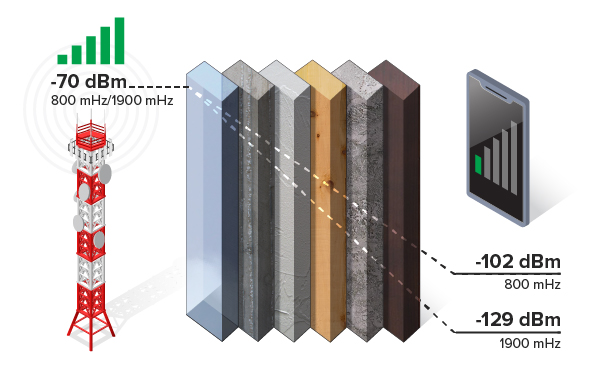
Whether it’s the combination of natural or manmade barriers between your location and the closest cell towers or the construction materials that comprise the building itself, there could be several reasons why the incoming cell signal keeps getting blocked. Measured in dBm, -50 dBm represents signal strength at full bars with -120 dBm indicating a no signal “dead zone”.
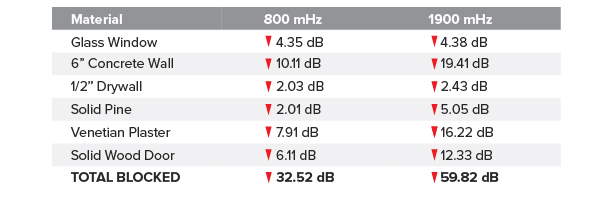
So, if your building has concrete walls, low-e glass windows, and wood doors, an otherwise good signal (-70 dBm) can quickly degrade to no signal (-120 dBm) before it even gets inside. WilsonPro amplifiers take that same signal and bring it indoors; effectively boosting the cellular reception throughout your building.
Professional Distributed Antenna System Installation & Solutions
Enterprise Systems provides comprehensive distributed antenna system solutions designed to eliminate wireless connectivity challenges in commercial buildings and facilities nationwide. Since 2002, we’ve delivered reliable distributed antenna system installation services that ensure seamless cellular coverage and emergency communications throughout your property.
The ability to boost the signal of cellular coverage from carriers to the inside of buildings that normally would have little or no coverage is essential for modern business operations. Our solutions address dead zones, improve network performance, and ensure regulatory compliance for public safety communications.
What is a Distributed Antenna System (DAS)?
A distributed antenna system is a network of spatially separated antenna nodes connected to a common source that provides wireless coverage throughout a building or campus. DAS wireless technology splits the transmitted power of a radio resource into additional antenna elements, delivering uniform coverage over the same area as a single antenna but with reduced total power and improved reliability.
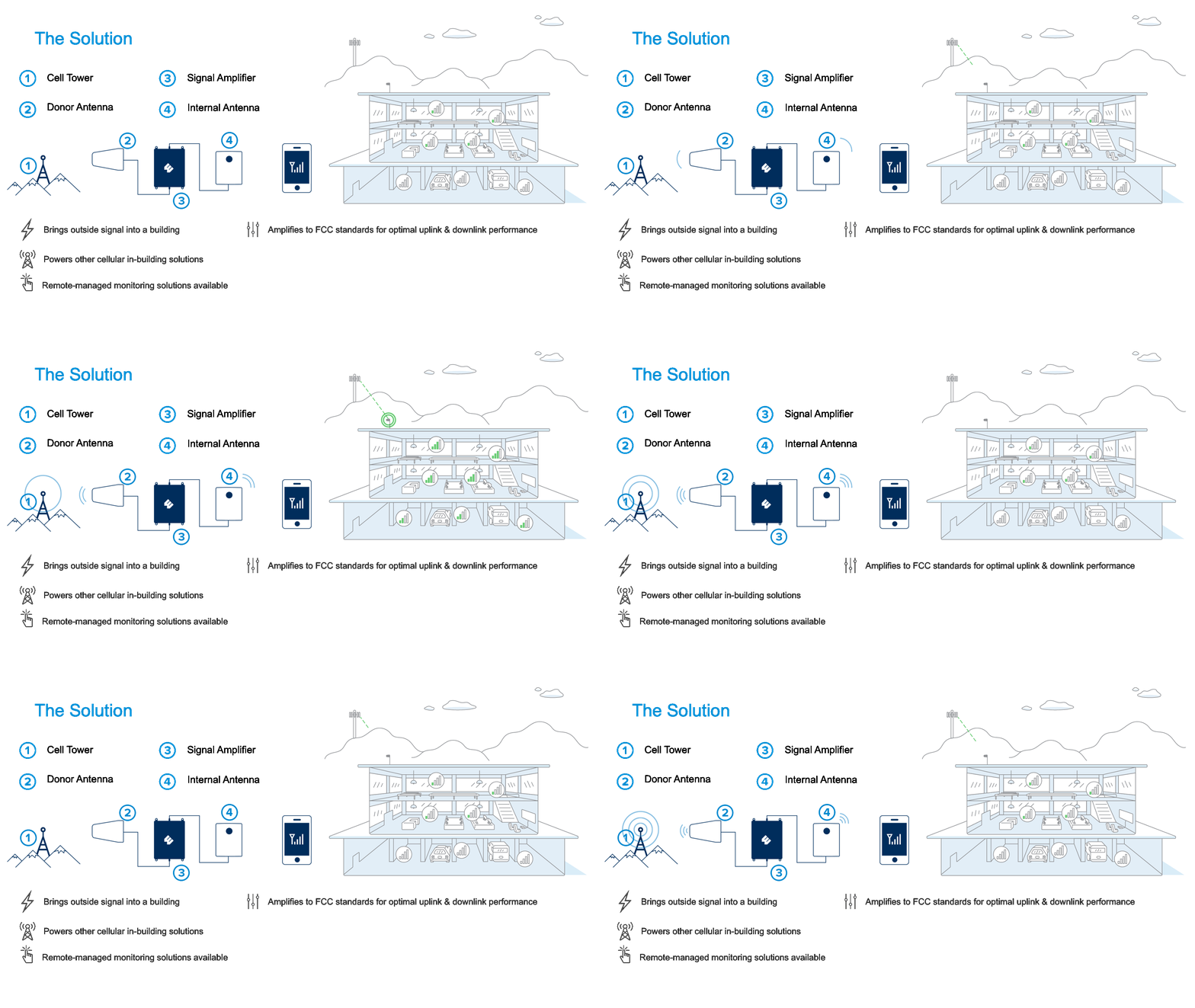
In practical terms, a distributed antenna system installation brings cellular signals from outside your building, amplifies them through a signal booster, and distributes them evenly throughout the facility. This ensures that employees, visitors, and emergency responders maintain consistent wireless connectivity regardless of building materials or structural obstacles.
Enterprise Systems serves as your reliable distributed antenna solution provider, offering comprehensive design, installation, and maintenance services for facilities of all sizes and complexities.
How DAS Works
The Challenge
Cellular and first responder radio signals that work perfectly outside a building often degrade significantly once inside. Common building materials, including low-E glass, concrete, steel reinforcement, and metal studs, actively block or attenuate wireless signals. This creates frustrating dead zones and unreliable connectivity that impacts business operations, customer satisfaction, and potentially life-saving emergency communications.
The problem intensifies in:
- Large commercial buildings with multiple floors
- Facilities with thick concrete or steel construction
- Buildings with energy-efficient materials that block RF signals
- Underground parking structures and basements
- Hospitals, hotels, and educational campuses
The DAS Solution
A properly designed distributed antenna system installation solves these challenges by creating a network of small antennas strategically placed throughout your facility. Here’s how the system operates:
- Signal Capture: External antennas or fiber connections receive strong cellular signals from outside the building or directly from carrier networks.
- Signal Distribution: The signal routes to a central headend unit that processes and distributes it to remote antenna units.
- Signal Amplification: Bi-directional amplifiers boost both uplink and downlink signals to maintain quality.
- Even Coverage: Small indoor antennas broadcast the amplified signal throughout the building, ensuring consistent coverage in every area.
This architecture provides reliable wireless service to every square foot of your property, regardless of size or construction challenges.
Types of Distributed Antenna Systems
Enterprise Systems offers three primary DAS configurations, each optimized for specific applications and building requirements:
Passive DAS
Passive antenna systems use coaxial cables and passive splitters to distribute signals from a central source without additional amplification at remote locations. This cost-effective solution works well for smaller facilities (typically under 100,000 square feet) with straightforward coverage requirements.
Best for: Small to medium office buildings, retail spaces, warehouses
Active DAS
Active distributed antenna system installations incorporate fiber optic cabling to transport signals with minimal loss, using remote units to convert optical signals back to RF at each antenna location. This scalable architecture supports multi-carrier, multi-technology deployments across large facilities.
Best for: Hospitals, universities, large commercial buildings, airports, stadiums
Hybrid DAS
Hybrid systems combine elements of passive and active architectures, using fiber optic distribution to key areas and coaxial cabling for final distribution. This balanced approach optimizes both performance and cost-effectiveness for mid-sized facilities.
Best for: Mid-size commercial buildings, hotel properties, medical facilities
Distributed Radio Solutions
Modern distributed radio systems use advanced digital transport technologies to support current cellular standards, including 5G, LTE, and legacy technologies simultaneously. These systems provide the highest capacity and future-proof scalability.
Best for: High-density venues, smart buildings, mission-critical facilities
Why You Need a Distributed Antenna System
Regulatory Compliance
Building codes increasingly mandate reliable emergency communications coverage. The International Fire Code (IFC Section 510) and NFPA 72 require adequate radio coverage for first responders throughout commercial buildings. A public safety distributed antenna system installation ensures your facility meets these critical requirements.
Business Continuity
Modern businesses depend on wireless connectivity. Dead zones and dropped calls frustrate employees, reduce productivity, and potentially cost sales. A commercial DAS eliminates these issues, supporting:
- Voice communications
- Data applications
- IoT device connectivity
- Mobile workforce productivity
Property Value Enhancement
Buildings with robust wireless infrastructure command premium rents and higher sale prices. Tenants specifically seek properties with proven cellular coverage, making distributed antenna system installation a value-adding investment that differentiates your property in competitive markets.
Emergency Preparedness
During emergencies, reliable communications can save lives. A properly designed DAS ensures that law enforcement, fire, and EMS personnel maintain radio contact throughout your facility, even in challenging RF environments.
Benefits of DAS Systems
Enhanced Voice and Data Performance
Every device on your property experiences improved signal strength and connection quality. Users enjoy faster data speeds, clearer voice calls, and more reliable service across all cellular carriers supported by your distributed antenna system installation.
Superior Density Coverage
As more devices compete for wireless resources, network performance can degrade. A DAS provides additional capacity, supporting higher user densities without sacrificing performance, critical for offices, venues, and public spaces.
Improved LTE and 5G Performance
Modern DAS supports the latest cellular technologies, delivering the high-speed data and low latency that business applications demand. Your antenna system installation future-proofs your facility for evolving wireless standards.
Multi-Carrier Support
Unlike carrier-specific solutions, our antenna systems can support multiple carriers simultaneously, ensuring comprehensive coverage regardless of which cellular provider your tenants, employees, or visitors use.
Public Safety Compliance
Meet IFC and NFPA requirements with a public safety antenna system that guarantees first responders can communicate effectively during emergencies. This isn't just regulatory compliance, it's a critical safety investment.
Increased Property Marketability
Properties with documented wireless infrastructure attract higher-quality tenants and command better lease rates. Your distributed antenna system installation becomes a competitive advantage when marketing to prospective tenants or buyers.
Reduced Infrastructure Costs
Compared to deploying multiple carrier-specific solutions, a neutral-host antenna system reduces installation costs, ongoing maintenance expenses, and facility impact while providing superior coverage.
Our Distributed Antenna System Solutions
Enterprise Systems provides DAS wireless solutions utilizing industry-leading equipment from trusted manufacturers:
Corning/Mobile Access
Advanced optical DAS solutions for large-scale deployments
TE Connectivity
Innovative antenna system components and infrastructure
Andrew/CommScope
Comprehensive DAS platforms for multi-carrier applications
Get Started with Your DAS Project
Whether you're experiencing wireless coverage issues, planning a new construction project, or need to meet public safety compliance requirements, Enterprise Systems provides the antenna system installation expertise you need.
Contact Our DAS Experts Today
Call Us: 877-343-1212Our distributed antenna solution specialists will:
- Assess your specific coverage requirements
- Conduct a complimentary site evaluation
- Provide a detailed proposal with ROI analysis
- Manage your project from design through activation
Don't let poor wireless coverage limit your business operations or put occupants at risk. Contact Enterprise Systems to learn how a professional distributed antenna system installation can transform your facility's connectivity.
Frequently Asked Questions
Project timelines vary based on facility size and complexity, typically ranging from 2 to 12 weeks for most commercial buildings. We provide detailed schedules during the design phase.
Investment levels depend on building size, coverage requirements, and system architecture. We provide customized quotes after conducting site surveys and understanding your specific needs.
Yes, modern antenna systems support 5G, LTE, and legacy cellular technologies simultaneously, future-proofing your investment as networks evolve.
For some system types, carrier coordination is required. Enterprise Systems manages these relationships, simplifying the process for building owners.
DAS enhances cellular coverage, while Wi-Fi provides local area networking. The technologies complement each other, and many facilities deploy both for comprehensive wireless connectivity.
Service Area
Enterprise Systems provides distributed antenna system installation services throughout the United States. Contact us to discuss your specific location and project requirements.
*** Get Down to Business ***

5G Frequently Asked Questions
Q: What is 5G and why is everyone talking about it? Will 5G really matter to me?
A: 5G stands for “5th Generation of cellular standards.” The eagerly anticipated arrival of the 5G network revolves around its performance enhancements over 4G LTE. With a data speed of 20Gbps peak / 1 Gbps average, 5G will provide fiber-like speed over a cellular connection, lower latency for the real-time response necessary for AI and VR applications, and the connection density to meet the massive demand for the IoT.
A: In order to introduce a true 5G booster to the market, two main objectives must be completed. First and foremost, regulatory approval. As of today, consumer signal boosters are only allowed to operate on certain existing sets of frequency or bands. FCC approval is needed before our boosters can operate on the new FR1 and FR2 bands specified for 5G service. Fortunately, Wilson Electronics had anticipated this need back in 2016 and has led the industry by petitioning the FCC for new frequency bands. Today, we continue to work diligently with the FCC—as well as other industry stakeholders and network operators—to determine which new bands we can use, complete any necessary impact studies, and finalize specification details.
In addition to regulatory approvals, IP needs to be developed. We are currently working on this IP in parallel with the completing the regulatory process. Once the FCC approves a true 5G booster for use in the consumer market, we will be among the first to offer it.
A: In a competitive environment, it’s only natural for carriers to want to be first to market. Some will stretch the boundaries in order to make that claim. An example of this is the “5Ge” icon being featured in AT&T’s marketing. The actual definition of 5Ge is “5G evolution”, meaning every enhancement in their network’s overall performance is considered an evolution towards 5G. Yet, it’s not true 5G as per industry specifications.
To improve performance on the existing 4G LTE network, several operators perform what is called “carrier aggregation.” This means combining up to three separate bands all at once in an effort to provide faster data rates. Additionally, some are deploying higher capacity antenna arrays on base stations (referred to as massive MIMO) and going to higher orders of modulation (more bits per MHz). Many will claim these service improvements qualify as 5G, but they’re just enhancements to existing 4G LTE network.
A: Since mobile carriers are planning to use the existing 4G LTE networks to carry the majority of cell service to consumers well into 2030, our current boosters will continue to work for years to come. The 5G network is being built alongside today’s 4G LTE network and will rely on the 4G LTE network as part of its failover or redundancy plan. The first priority of 5G will be for its use as a replacement for fixed wireline service.
That being said, the 4G LTE network will be in use by the majority of cell users (and will serve as the failover or redundancy plan for the 5G network) well into 2030. The new bands designated for use by 5G are not currently approved by the FCC. Once they are, Wilson Electronics will o er a 5G signal booster solution. In the meantime, if your voice and data connectivity is weak on the existing 4G LTE network, our products will continue to provide you with better connectivity for the next several years.
Cellular Signal Boosters for Commercial Buildings
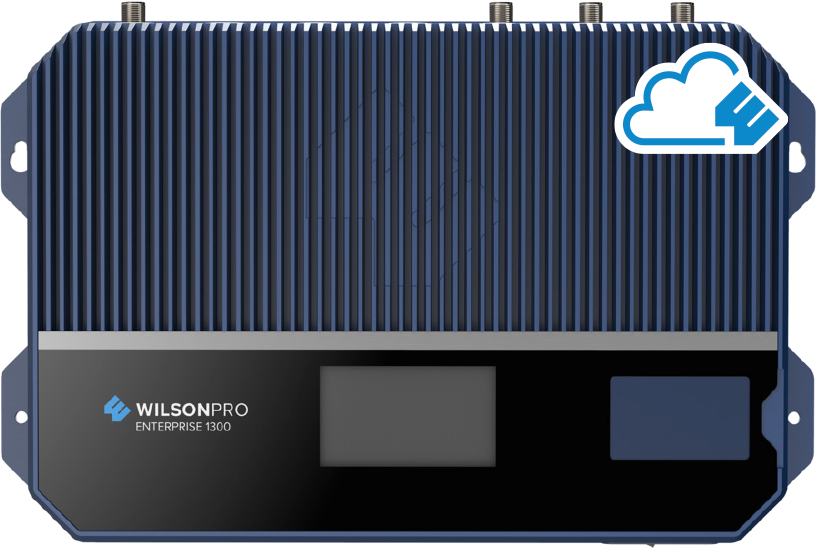
Enterprise 1300
SKU: 460149
FEATURES:
- Three outdoor antenna ports to target multiple carrier towers.
- Wired or LTE WilsonPro Cloud access for remote functionality.
- Up to 26 dBm in uplink power and 17 dBm in downlink power.
- XDR technology to virtually eliminate shutdown or signal loss.
- 4.3-inch LCD touchscreen for an enhanced user-experience.
- Works with ALL phones and cellular devices on ALL carriers.
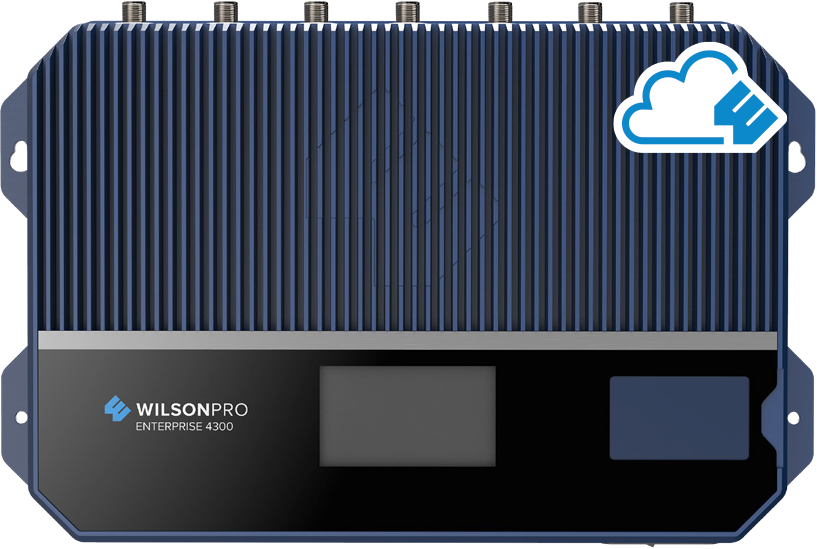
Enterprise 4300
FEATURES:
- Three outdoor antenna ports to target multiple carrier towers.
- Four independently controlled indoor antenna ports built in.
- Wired or LTE WilsonPro Cloud access for remote functionality.
- Up to 26 dBm in uplink power and 17 dBm in downlink power.
- XDR technology to virtually eliminate shutdown or signal loss.
- 4.3-inch LCD touchscreen for an enhanced user-experience.
- Works with ALL phones and cellular devices on ALL carriers.